Wednesday, June 5, 2013

[Article] Dwarves


A notably prominent demi-human race in Dungeons & Dragons, dwarves no doubt owe their popularity to the success and mythology of Middle Earth. Whilst well known from legend, medieval literature and folk tales, not to mention modern works of fantasy, it is dwarves as they are depicted in the Hobbit and the Lord of the Rings that dominates the collective imagination. Indeed, the purpose of their first introduction in the Fantasy Supplement was to allow the medieval miniatures war gamer to "refight the epic struggles related by J.R.R. Tolkien" using Chain Mail. Given this context, it is interesting to note that dwarves are classed as "heavy foot" in attack and "light foot" in defence, since this compares unfavourably to elves, orcs and men (assuming Viking or Norman type infantry). Even the advantage they enjoy in Dungeons & Dragons against trolls, ogres, and giants is of little matter in Chain Mail, as though they take half the ordinary number of hits from such monsters, they only inflict half themselves in return. Combined with a relatively slow movement speed and commensurately high point cost, dwarves make for a poor choice of troop type, unless fighting underground or otherwise in darkness.

By contrast, dwarves were presented as equal or superior to orcs in the original edition of the Dungeons & Dragons adventure game. Additionally, they were shifted from being exclusively lawfully aligned to also potentially neutral, like elves. When the five point alignment structure was introduced in Strategic Review #6, though, dwarves became mainly lawful with good tendencies. Holmes interpreted this as meaning that a quarter of dwarves would be aligned with lawful good and the remainder neutral. For their part, B/X and BECMI retained the earlier ambivalence, whereas the Advanced Dungeons & Dragons Monster Manual took a more straightforward approach, classifying dwarves as lawful good, possibly so as to contrast them with the chaotic good elves. Perhaps this is also why a subrace of "mountain dwarves" with 1+1 hit dice appears as a note in the same work, further reinforcing the mirror like juxtaposition of the two best known demi-human races. Somewhat related may be the reference in the Dungeon Master’s Guide (p. 104) to the apparently chaotic nature of orcs, which could suggest that at an early juncture their alignment was opposed to that of the lawful evil goblins or hobgoblins, creating a tetrarchy of juxtaposed races.

With regard to class choices and level advancement, dwarves, like gnomes and halflings, fall short of elves, to embrace the pun. Lack of magical ability serves to differentiate them, but also creates a problem for their independent manufacture of magical arms and armour. The Dungeon Master’s Guide indicates that very old dwarves who have reached maximum level advancement have the necessary magic and spells to create such items, providing that they are also possessed of great intelligence and wisdom. No more detailed explanation is provided for how this might be possible, but it is worth noting that there is technically no prohibition on dwarf sages having magical ability. One solution is to simply remove the class and level restrictions for demi-humans altogether, but there is something rather incongruous about dwarf magicians and halfling paladins. Indeed, it is entirely purposeful that, for example, halflings make for neither powerful wizards nor great warriors, and surpass none as thieves or as clerics. Perhaps the ability of high-level thieves to use spell scrolls is the most viable solution to the puzzle, since all demi-humans enjoy unlimited advancement in that class and so potentially equal access to such magic.

Notably, the physical appearance of dwarves is consistent across all editions from the Greyhawk supplement onward, which is to say their colouration is grey to brown, they stand around four feet tall, and they weigh about one-hundred and fifty pounds. There is a shift between the original and advanced game, in that they go from having skin that is a ruddy tan, brown or grey to having tan or light brown skin and hair that is brown, grey or black. Additionally, mountain dwarves are indicated in the Monster Manual to be fairer and taller, at around four and a half feet, and the Complete Book of Dwarves introduces sundered dwarves, who are fairer and taller again, reaching up to five feet in height. It can be troublesome to adjudicate the restrictions size imposes on characters; first edition prohibits characters under five feet from using the long bow and B/X extends this to the two-handed sword, but it is second edition that imposes the most stringent limitations, preventing small-sized characters from using large-sized weapons, requiring medium-sized weapons to be wielded with two hands, and lowering their base movement to 6", rather than the 9" Gygax suggested. Little wonder, then, that Sage Advice advocated treating dwarves as being medium-sized!

Perhaps somewhat surprisingly, there were no dwarf player characters in the original Silver Blade campaign, and they have only been an occasional choice subsequently. Quite why is unclear, but it may be an example of gnomes serving as a conceptual substitute, since in no case were there gnome and dwarf player characters in the same campaign. Of course, the players themselves typically already had experience of other fantasy adventure games, such as War Hammer, if not Dungeons & Dragons itself, and so it may simply be that the novelty of demi-humans had worn off for them. So far, the two most successful dwarf player characters have both been cleric types, one managing to establish a string of religious strongholds along a stretch of the dust march. Naturally, since the dwarf cleric and fighter/cleric were originally only non-player character options, these were player characters generated using post Unearthed Arcana rules. In the World of Silver Blade, dwarves are primarily found in the northlands where they have a major realm beneath the mountain ranges that divide the Great Kingdom of Calthornia from the demon haunted desert of ash. Nevertheless, there exist relatively isolated, but much valued, communities of dwarves elsewhere.

Often additional content for Advanced Dungeons & Dragons is generated by subdividing existing material, resulting in greater specificity and detail. For instance, and as a case in point, the Complete Book of Dwarves identifies hill, mountain, deep, gully, sundered, and grey as subraces. In the World of Silver Blade, however, these are all consolidated into "dwarf" for game rule purposes. Several changes to the default have been made, mainly with a view towards greater generalisation and simplicity. Perhaps the most contentious of these is increasing the average height of dwarves to around five feet so as to ensure they can be credibly classified as medium-sized. Additionally, their saving throw adjustment against magic and poison has been detached from constitution, their combat benefits against the "giant class" subsumed in a general fighting ability bonus, and their detection abilities revised. Moreover, the non-magical nature of dwarves has been deemphasised in view of the fact that gnomes and halflings enjoy the same resistances. These modifications recommended themselves during campaign play and may not be suitable for others outside that context, but they are made available here as a matter of potential interest: Silver Blade Dwarves.


Saturday, September 29, 2012

[Article] Gnomes


Unlike the other demi-human races in Dungeons & Dragons, gnomes have no analogue in the mythology of Middle Earth. Judging from the list of literary influences in the first edition of the Dungeon Master’s Guide, it seems likely that the inspiration for their inclusion was the work of Poul Anderson. In particular, gnomes appear in The Broken Sword as well as Three Hearts and Three Lions. Whilst in the former their depiction is brief, but separate from that of the mountain dwelling dwarves, in the latter gnomes are synonymous with dwarves, and are indeed only referred to as such. This goes a long way towards explaining why they are classified as the same troop type in the Chain Mail Fantasy Supplement, but are nevertheless somewhat differentiated in the original edition of Dungeons & Dragons. Moreover, it sheds light on the decision to later present them as a separate playable race in the Advanced Dungeons & Dragons Player's Handbook. Simply put, gnomes had originally been conceived as a type of dwarf within the game framework and so already were a playable demi-human race from the start. It can reasonably be surmised that this was changed because dwarves were perceived to be eclipsing gnomes as a potential archetype.

Of course, this strikes at the heart of the matter, in that the gnome is a relatively weak archetype that has not subsequently been able to establish itself firmly at the centre of the corpus. Perhaps the most significant and unavoidable difficulty is that it is vying for much of the same conceptual space that the dwarf already fully occupies. The first attempt to differentiate them from one another seems to have come with Strategic Review #6, where gnomes are listed as chaotic good and dwarves as lawful good. Whilst this was retained for the Holmes version of Dungeons & Dragons, it did not carry over into subsequent editions, perhaps because they reverted to the three point alignment system. Neither, however, was this distinction retained for Advanced Dungeons & Dragons, even though it used a nine point alignment system. Instead gnomes were classified as neutral to lawful good, which in second edition became just neutral good. Most likely these neutral to lawful alignment designations refer to the opposition of law and chaos in Three Hearts and Three Lions, as that is roughly where gnomes and dwarves stand in that work. Still, it is not very useful in drawing a distinction between the two for swords & sorcery adventure games.

In the post Holmes Dungeons & Dragons monster entries for gnomes and dwarves there is little difference between the two races; one point of armour class, one point of average damage, thirty feet of infra-vision, an especial hatred of kobolds for the former and of goblins for the latter. For the most part this echoes their depiction in the Monster Manual, though gnomes and dwarves there have the same degree of infra-vision and overlapping racial animosity toward goblins. The advanced system also gives both races a resistance to magic and poison, as well as the ability to detect various facts about dungeon environments, such as depth underground and the gradient of sloping passages. Whilst the Monster Manual indicates that gnomes are around three feet tall, thus a foot shorter than dwarves, the Dungeon Master’s Guide suggests three and a half feet is average, closing the gap by half a foot. Probably it is no coincidence that the average height of gnomes in the former work is the same as that of Hogi the dwarf in Three Hearts and Three Lions. Either way, the height disparity appears to affect what creatures they get their defensive bonuses against, gnolls and bugbears being added to ogres, trolls and giants for gnomes.

As well as being physically smaller, the Dungeon Master’s Guide indicates that gnomes also have a lower average strength than dwarves, being 10 and 14 respectively; the racial minimums for attributes outlined in the Player’s Handbook further suggests that there is a similar or greater differential in constitution, though they have a higher minimum intelligence. Whilst in the original game all demi-humans have a 2-in-6 chance of successfully listening at a door, which is twice that of humans, in the advanced system gnomes have the best chance and dwarves no advantage at all. The Dungeon Master’s Guide also notes that gnomes have less ability than dwarves as armourers or jewellers, but greater skill in the cutting of gems, though this is of little direct consequence to player characters. Perhaps the most significant difference is hinted at in the Monster Manual, where it is suggested that some gnomes are rumoured to possess magical ability, which is fully articulated in the Player’s Handbook with the introduction of gnome illusionists. Notably this directly contradicts what Hogi says of his folk in Three Hearts and Three Lions, reinforcing again the eclectic way that Dungeons & Dragons used its sources.

Whilst gnomes were a relatively popular choice of player character race in the earliest World of Silver Blade campaigns, as with halflings, interest in them later waned sharply. Only three examples come readily to mind, and the latter two a purposeful comedic pairing of twin brothers named "Bill" and "Ben" (yes, as in the eponymous "flowerpot men"). None of these prospered long enough to have a significant impact on the campaign world or contribute to the milieu as retired non-player characters. For the most part, gnomes have been employed as comic relief by players and game master alike, from a ship full of muscle-bound Nordic pirates to a squeaky-voiced eccentric inventor. Initially there was no specific place for gnomes in the Silver Blade campaign setting, but during its resurrection and the redevelopment process it was quickly established that a number of gnome princedoms bordered on the dwarf kingdom. These were conceived of as being somewhat reminiscent of the medieval Welsh principalities, if on a larger scale. As a sort of adjunct of the mountain dwelling dwarves it seems like the gnomes have more gravitas; proud, fierce and clannish they make the wilderness of the borderland their home.

Since gnomes never appeared as a separate player character option from dwarves outside of Advanced Dungeons & Dragons, there are few contradictions to reconcile. The main difficulty lies in differentiating them from one another without defining them in terms of what they are not. Rather than seek to do so by minor variations, such as the range of infra-vision, it may be considered better to embrace the shared abilities of demi-humans as a common faerie heritage. Nevertheless, one ability evident in Three Hearts and Three Lions, but absent from gnomes in Dungeons & Dragons, is that of Hogi to track magical enemies by their scent. Giving them the tracking capability of the ranger subclass seems like a natural fit and does serve to help to set them apart from the other demi-humans. It is also quite interesting to note that as originally presented in Chain Mail the defensive advantage that gnomes and dwarves enjoyed versus ogres, trolls and giants was just as much of an disadvantage offensively, which happily argues for dropping them from consideration altogether. As with halflings, the following must be somewhat speculative on account of there not being much call for their use in play: Silver Blade Gnomes.

Wednesday, September 12, 2012

[Article] Halflings


Of all the demi-human races in Dungeons & Dragons, halflings are surely the most undeniably linked to the mythology of Middle Earth. The earliest printings of the Chain Mail Fantasy Supplement reference them as hobbits, along with nazgul, balrogs, rangers, and various tribes of orcs, terms which were apparently mostly removed after some legal disagreement with the Tolkien estate. Nonetheless, halflings remained completely recognisable as their former selves; indeed the term itself is drawn from the Lord of the Rings, being a word used by men to describe the "little folk". As presented in the Chain Mail Fantasy Supplement, halflings are indicated to have "small" (pun intended, no doubt) place in a war game, and are only included for the recreation of "certain battles". In fact, though, they are rather effective troops in that they have the ability to turn invisible in brush or woods, have a movement of 12", and every two shooting count as three on the missile table. Unfortunately, no point value is provided, so players must come to their own agreement as to how and when halflings can be deployed. Most likely Gygax had in mind scenarios recreating the "scouring of the shire" or perhaps the exploits of "Bullroarer Took".

Whatever the facts of their initial inclusion, halflings certainly made the transition to the original edition of Dungeons & Dragons as a player character option. However, it is again reinforced there that they have no great place in the game, which is to say that "should any player wish to be one, he will be limited to the fighting-man class" and in any case "cannot progress beyond the fourth level" of ability. On the other hand it is noted that halflings have "magic-resistance equal to dwarves" and "deadly accuracy with missiles", so they are not completely unappealing, for example as henchmen. These limitations were slightly mitigated with the release of the Greyhawk Supplement and the introduction of the thief class, which provided all demi-humans with unlimited advancement potential and the prospect of multi-classing. Furthermore, it included errata to the effect that hobbits got +3 to hit probabilities with slings, translating the earlier Chain Mail advantage into the alternative combat system. Unlike the other demi-humans, halflings do not get a listing in Monsters & Treasure, and are inconsistently referenced in the Swords & Spells supplement, so we are left in the dark as to their original capabilities as "monsters".

However, halflings do get a half page entry in the first edition of the Advanced Dungeons & Dragons Monster Manual, which preserves and elaborates somewhat on the previous details. By contrast with dwarves and elves, halflings are deemed a rare encounter, which tells us a little of their relative expected frequency in a given campaign milieu. Following Strategic Review #6, their alignment is fixed as lawful good, whilst the fourth level of ability continues to be the highest they can achieve as a fighter, though two subraces are introduced whereby advancement to fifth or sixth level is possible for those with very high strength. In keeping with Swords & Spells the halfling movement rate is reduced to 9", no doubt reflecting their size and typical armour type. We also learn there that halflings are very intelligent, but stand only 3'+ in height; the subraces are a bit taller at 3½'+ and 4'+ respectively, though the former is intriguingly implied to be therefore smaller than the average. The "stout" halfling subrace exhibits some dwarvish qualities, including the ability to see in the dark with apparently no drawbacks. All halflings enjoy the equivalent of elvish stealth and can operate together with them in that capacity.

Notably, there is some controversy over how the halfling entry in the Player’s Handbook relates to that in the Monster Manual, especially with regard to their adjustment to hit with missile weapons. Essentially, the question is as to whether the bonus encompasses the dexterity of halflings or not, since the saving throw adjustment versus magic and poison clearly does subsume their constitution. A compromise approach was taken by the Holmes edition of Dungeons & Dragons whereby the bonus was reduced to +1, and this was followed in subsequent iterations of the non-advanced game and the second edition of Advanced Dungeons & Dragons. Confusingly, the latter assigns the bonus to slings and thrown weapons only in the Player’s Handbook, but the Monster Manual indicates that a +3 adjustment applies to attacks made with slings and bows. This confusion is compounded by the Complete Book of Gnomes & Halflings and Player’s Option: Skills & Powers, the former indicating that the +1 applies to all missile weapons and the latter again restricting it to thrown weapons and slings. Similarly the second edition of the Player’s Handbook and Monster Manual disagree as to whether halfling base movement is 6" or 9", respectively.

During the first campaign in the World of Silver Blade, halflings were a popular choice of race; there were at least three amongst a dozen or so player characters. In part this may have been the continuation of a trend carried over from the non-advanced version of the game, but it is also worth noting that level limits were of little concern, being as if there was any awareness of them at all it was in the context of the less stringent second edition of the Advanced Dungeons & Dragons system. Concerning the fates of these halflings, one was unlucky enough to put on a vampiric helmet, and another slain by a powerful demon, but the third did manage to retire as a wealthy burgher. Subsequent Silver Blade campaigns witnessed a pronounced decline of interest in halflings as a player character race, indeed no examples spring to mind. Even widening the net yields only two recollections, the first being from almost two decades ago in a Ravenloft campaign, and the other a more recent addition to the Greyhawk roster. This apparent lack of interest suggests that halflings have as little place in adventure games as they do in war games, but nevertheless it behoves us to offer them as an option, perhaps for the recreation of "certain adventures".

From a design and development standpoint it is relatively straightforward to resolve the contradictory rules that have accrued around halflings through the editions. It is much more difficult to make them a compelling and interesting game option, as the article by Roger Moore, the "Halfling Point of View" (Dragon #59), and the Complete Book of Gnomes & Halflings both amply demonstrate in their over generalised restatements of a Tolkien gleaned mythology. There is no reason halflings could not be presented as more fey than mortal, for instance, less "little men" and more "little elves". Maybe, like the faerie folk of the Broken Sword, they have not souls as men do, and belong properly to the unseen otherworld. Nor is there really any compelling purpose to keeping them married as a race to the lawful good alignment. Certainly, a lot of potential for differentiation could be realised without needing to go so far as the kleptomanic kender of Dragonlance or the cannibalistic halflings of Dark Sun. Since there has been so little call for them in the World of Silver Blade, though, the following must be necessarily somewhat speculative, but is intended to explore one way in which they might be leveraged a little way out of the Tolkien mould: Silver Blade Halflings.

Monday, September 3, 2012

[Article] Races & Subraces


As they appear in the Chain Mail Fantasy Supplement, the various humanoids and demi-human races have only a single troop classification each. For example, there are no elvish light foot or elvish heavy foot, there are just elves, all of which are classified as heavy foot with 12” movement and bows. Somewhat amusingly, then, it could be argued that Chain Mail was the first place where the concept of “race as class” manifested in the Dungeons & Dragons corpus. Indeed, this conceit seems to have persisted into the Monster Manual, where for instance elves are listed as doing 1-10 damage, and beyond. However, it is worth noting that in Spells & Swords lightly and heavily armoured elves are provided as an analogue to lightly and heavily armoured men, even if the same cannot be said for halflings, gnomes, dwarves or humanoids. Nonetheless, the four basic demi-human races of Advanced Dungeons & Dragons originated in the Chain Mail Fantasy Supplement, and it is noticeable that gnomes are not presented as a playable race in the original edition of Dungeons & Dragons, though they are described in Monsters & Treasure. By the same token, fairies are listed in Swords & Spells, but not in Dungeons & Dragons.

One possible reason for the exclusion of fairies and gnomes from Dungeons & Dragons as playable races is that they are in the same troop class as elves and dwarves, respectively. When gnomes are described in Monsters & Treasure it is noted that they are “slightly smaller than dwarves, and with longer beards”, that they live in “hills and burrows” as opposed to the “mountainous homes” of the dwarves, that they are more reclusive than their “cousins”, but in all other respects resemble them. Similarly, when fairies resurface in the Advanced Dungeons & Dragons Monster Manual it is as an alternative name for “grey elves, albeit now spelt as “faerie”. It can be seen, then, that these shared troop classifications in Chain Mail were the kernel for the concept of the demi-human races being organised into subraces, a fate that gnomes more or less escaped when dwarves were divided into hill and mountain types. Also first introduced as a playable races in the Advanced Dungeons & Dragons Player’s Handbook are the semi-humans, which is to say half-elves and half-orcs. These two options are fairly clearly imported from Middle Earth and the Lord of the Rings, though altered during the transition in various ways; as combination races they are an analogue to the multi-classes.

Just as with the prohibition on demi-human player character clerics, the subraces made their way out of the pages of the Monster Manual and into Unearthed Arcana as playable options. Perhaps the most famous of these subraces is the drow or dark elves, not only as exotic and despicable antagonists, but also as the progenitors of perhaps the most popular and simultaneously unpopular Dungeons & Dragons character of all time. In this way halflings were subdivided into hairfoot, stout, and tallfellow, gnomes into deep and surface, dwarves into hill, mountain and grey, whilst perhaps most egregious of all elves were subdivided into dark, grey, high, valley, wild and wood subraces. Frankly, this proliferation of playable options needlessly bloated the game, the net result being the encouragement of character optimisation; as Gygax attested, players who wanted to play an elf magician, including himself, selected the grey elf subrace because it was the best prospect for the advancement of magical ability. Rather unsurprisingly, second edition initially reversed this trend and then gradually reintroduced all of the previous options and more, giving us sundered and deep dwarves, rock and forest gnomes, not to forget orcs and other monsters as playable races.

Most of what Advanced Dungeons & Dragons calls subraces rely on their environment for differentiation, which is to say that there is barely any justification for them. The distinctions drawn are rarely any more sophisticated than denotation as mountainmen, hillmen, woodsmen, plainsmen, rivermen, and so on; fantasy adventure games being what they are, the prefixes “dark” and “deep” can also be profitably employed to describe evil aligned or subterranean dwelling variants on a demi-human race, in other words of the underworld. Indeed, this simple taxonomy of races and subraces can potentially be quite attractive, and certainly the World of Silver Blade initially embraced such concepts readily. When one considers dark gods, elves, dwarves, priests, wizards, and knights, it is a rather short step to “dark” men, halflings and, gnomes, not to forget the ever popular “anti-paladin”. At around this point it all becomes faintly ridiculous, or at least it ought well to seem so to anybody with a decent sense of aesthetics (yes, that is a somewhat subjective sentiment). None of this is to say there is no place for “mountain dwarves” and “wood elves” or “dark gods” in adventure games; it is just a rejection of proliferation for its own sake.

The basic underlying question rarely asked of playable races and subraces is what the point actually is of having them and where the appeal lies. Gygax was quite frank when questioned about his motive for their inclusion, which was that the Lord of the Rings was enjoying an unprecedented popularity at the time as the touchstone for fantasy and he hoped to harness that for commercial purposes. Bearing in mind the ever controversial demi-human level advancement limitations and discouragement in the Dungeon Master's Guide as to monsters as player characters, this does ring true; Gygaxian Dungeons & Dragons is human-centric. However, it does not really answer the question, which is why is it that people desire to play non-human characters in the first place? A passable case could be made for it being chiefly about escapism, shedding even humanity in a bid to get as far away from the mundanity of life as possible, and for some people this may well be true. Really, though, that is a fantasy underlying a fantasy, inherent humanity is a basic limitation on the ability of the mind to explore any imagined landscape. It is this that leads to the assertion that playing a demi-human is typically nothing more than playing a human in a “funny suit”.

Such sardonic condemnation somewhat misses the point of playing a demi-human, though, and that is role emulation. It is no coincidence that so many new players name their first halfling Bilbo, their first dwarf Gimli, or have a Tanis Half-Elven. Perhaps the most alluring prospect of adventure games is the ability to step into the skin of a beloved literary character and assume their role, or one close to it. That is the actual purpose of playable demi-human races, not to escape human experience, but to facilitate the exploration of a particular character or archetype, often including its own subversion. A subrace usually isolates particular characteristics and repackages them as something new, dwarves that definitely live in mountains for instance, narrowing the role for the player in advance. Essentially it comes back to the question of abstraction versus specificity, with subraces as a means of increasing the degree of the latter at the expense of the former. More detail determined in advance of contact with the imagination of the player, more structure and uniformity with less room for deviation and innovation. Not that such is inherently bad; it is just that treating a subrace as an optimised version of a race rather defeats the point.

Sunday, August 26, 2012

[Article] Orcs & Goblins


Aside from the titular beast itself, orcs and goblins are perhaps the best known monsters associated with the Dungeons & Dragons game. Probably they are also the clearest link to the Lord of the Rings and Middle Earth, though less certain antecedents have been occasionally suggested. No doubt they have served as the foot soldiers and minions of an endless parade of dark lords and evil magicians in the decades since they were described in Monsters & Treasure. However, it was Chain Mail where they originally appeared for gaming purposes, and where a clear taxonomy was established. Therein kobolds and goblins are presented as equivalent, the only difference being that they have a reciprocal racial hatred for gnomes and dwarves, each respectively; above them are orcs, tellingly described as "nothing more than overgrown goblins" and in the Fantasy Reference Table equipped with bows. Both of these troop entries contain a note that stronger versions exist, in the case of goblins there are hobgoblins and for orcs there are "giant orcs". In ascending order of combat ability they can be listed as goblin, orc, hobgoblin, and giant orc. One significant difference between goblins and orcs is that the later are factional and will fight amongst themselves.

With Monsters & Treasure the same basic order is followed, though kobolds are shifted one class below goblins and “giant orcs” disappear, perhaps replaced by gnolls. Although the entries for kobolds, goblins and hobgoblins are very similar to one another, orcs are described in more detail and there is a table showing the probability of them being led and protected by a powerful fighting-man, magic-user, dragon, a small group of ogres, or even trolls. Interestingly, whilst in Chain Mail all of these monsters are always of chaotic alignment (p. 39), in Men & Magic orcs are also listed in the neutral column (p. 9). By the time of Strategic Review #6, and the emergence of the nine point alignment system, the thinking had changed so that goblins and kobolds are classed as lawful evil and orcs as chaotic evil. This pattern was continued in the Holmes edition of Dungeons & Dragons, and for the first time it is also noted that hobgoblins do not suffer any penalties when fighting in sunlight. Significantly, this tendency was ignored with the publication of the Monster Manual for Advanced Dungeons & Dragons, where orcs were listed with a lawful evil alignment, but are still noted to have a tendency for infighting. A comparison of basic statistics across editions can be downloaded here.

Obviously Tolkien and Middle Earth had a great influence on the depiction and development of orcs in the game, from Chain Mail onwards; goblins and hobgoblins mirror the definitions in the introduction to the Hobbit, the factionalism of orcs reflects events at the holdfast guarding Cirith Ungol, their collective dislike of sunlight and the eventual resistance of hobgoblins to its effects, even being armed with bows by default is suggestive of the uruks of Saruman. Visually, though, the orcs of Dungeons & Dragons, pig-headed and literally animalistic, diverge from the dominant aesthetic of Middle Earth. Furthermore, the Monster Manual artwork actively and significantly differentiates kobolds, goblins, orcs and hobgoblins from one another, leading eventually to the association of kobolds with dragons of all things. Notably the accompanying text no more supports the idea that kobolds have scales than it does that hobgoblins are equipped as pseudo-samurai. The sheer scale of variation and potential for confusion is probably most clearly demonstrated in an article published in Dragon #25, “Would the Real Orc Please Step Forward?” Diversity can be advantageous, but it is unusual for a monster to have such an indefinite appearance.

The artwork for the second edition of Advanced Dungeons & Dragons consciously compromised between the pig-headed orcs and the increasingly common depictions of monstrous grey-green humanoids; Doug Chaffee even went so far as to homogenise orcs and goblins for the front cover of Dragonspear Castle, which was an illustration also prominent in the Player’s Handbook. Furthermore, the arguably over detailed descriptions of humanoid "societies" in the second edition Monster Manual took its lead from B2 Keep on the Borderland, essentially treating them as primitive human tribes of evil disposition, with females and children to defend. Perhaps the origin of this view is an article by Roger Moore published in Dragon #44, "Fantasy Genetics I: Humanoid Races in Review", which suggests that kobolds, goblins, orcs and hobgoblins "represent a collateral branch of humanoid evolution." Certainly this seems to humanise and detract from the monstrosity of orcs and goblins, naturalising and reconciling them to a rational world that rejects the mythic underworld as sufficient explanation. Such socially organised monsters present an infamous conundrum for good aligned characters in dealing with non-combatants.

For the World of Silver Blade this subversion of the mythic monstrosity of orcs and goblins is far from satisfactory, but some sort of alternative explanation for their existence still seems necessary. Of course, Tolkien wrestled endlessly with their origin and nature without ever reaching any definite conclusion, even though the Silmarillion suggests that they are corrupted elves and the Lord of the Rings that they are bred in the black pits of Mordor and Isengard. The idea that orcs and goblins are bred by evil beings is intriguing and has some potentially horrific implications when one considers what the breeding stock might be. Still, the idea that they are bred like animals is perhaps an over rational interpretation, ignoring the inference that sorcery plays a significant role in the process. Although it may seem initially objectionable that orcs and goblins are created by magical means, it reinforces their existence as unnatural, and suggests them as a living parallel to the undead. Such a dislocation from the natural order of things capitalises on the fear of otherness that the mythic underworld lends to its monstrous denizens, evoking a sense of unknown evil in its distance from the human experience.

Somewhat fortuitously, there exists already an entire category of spells that can be leveraged in support of this conceptualisation of orcs and goblins. The various monster summoning spells cause creatures to appear from elsewhere in order to serve the caster for very short periods of time, but if instead they created the monsters permanently in a similar manner to the animate dead spell, then they become a ready explanation for how and why so many diverse monsters fill campaign worlds and their dungeons. In particular it explains why orcs and goblins feature so prominently as the foot soldiers of dark lords and evil magicians, magic creates monsters. Of course, it cannot be too easy for monsters to be created; broiling flesh pits would need to be prepared to provide living bodies for evil spirits to enter, in the manner of undead and demons, the evil dead put to new purpose, incidentally explaining why such creatures should be so aligned, and irredeemable. Compelling them to service might similarly be a difficult matter. No doubt this solution would neither be palatable or necessary for every campaign, but for the World of Silver Blade it preserves logically and satisfactorily the monstrous and unnatural nature of monsters.

Sunday, August 21, 2011

[Review] AA9 The Lost Pyramid of Imhotep


The Lost Pyramid of Imhotep

Author: Alphonso Warden
Contents: 12 saddle stitched black and white pages, 1 title page, 10 pages of adventure, and 1 open game license page.
Publisher: Expeditious Retreat Press
Product Code: XRP6109
Retail Price: £7.00 or $12.00

Overview

An adventure for 4-6 characters of levels 4-7, the Lost Pyramid of Imhotep is an unusual five level dungeon with a tightly integrated theme. The physical product is furnished with a glossy cover stock, durable internal pages, clearly printed text, and well rendered black and white internal maps. Both the front and back cover illustrations are by Jeff Womack, though misattributed to Advanced Adventures stalwart Bradley McDevitt, and each depicts an encounter from the adventure with suitable atmospheric weirdness, complementing the relatively unusual subject matter. Whilst the title page illustration, also by Jeff Womack, is the only interior piece provided, it similarly sends a clear visual signal to the reader to anticipate a conflation of the familiar and the strange. Of the three images, this last is probably the most compelling, perhaps because it contrasts in its exterior enormity with the more claustrophobic and close quarter encounter environments used for the cover pieces. Even though the module is only twelve pages long, it is disappointing for there to be no other interior illustrations, especially when there are none of adventuring parties exploring or interacting with the dungeon and its denizens.

The scenario premise is straightforward, in that the player characters are hired by a magician to investigate recently unearthed evidence of a tomb in the desert. Since the adventure takes ancient Egypt as its thematic inspiration, there are numerous references to the trappings and theology of that culture, and a good deal of concern is given to the need to translate hieroglyphs. Indeed, it is noted that adventurers native to the area will have a much easier time than outsiders, and that holds true for much of the module. Progressing to the lowest dungeon levels requires being able to answer several rather culturally specific questions, and unless the players happen to know or guess correctly the game master will have to decide how to handle the player characters accessing the necessary knowledge. Whilst some of the rooms require clever thinking or intuition to overcome, many of them rely more heavily on the random outcome of the dice with little consideration given to alternative solutions. Although this is not much of an issue in cases of combat with guardians, it is more problematic when characters are left with no option but to make saving throws, as is the case in area fourteen for instance.

Interestingly, there is very little treasure to be had in the tomb complex, and what little there is could easily be missed. As a result the player characters will likely waste plenty of time searching fruitlessly, but in the absence of wandering monsters they can do so at their leisure. There is an item that could conceivably have a similar role, but as soon as the players figure out what is going on they are likely to stow it somewhere safe until needed and thereby obviate any time considerations. Similarly, the compact nature of the dungeon has left little opportunity for the game master to expand on what is provided, which is unusual for traditional style modules. Of the nineteen encounter areas at least seventeen of them must be explored, largely one after the other, in order to reach the final location. Naturally, this makes for rather linear exploration, which may frustrate players and game masters used to more expansive designs, but for tournament purposes is entirely suitable. Moreover, not every dungeon need be cut from the same cloth. Given that the adventurers manage to successfully negotiate all the dangers and puzzles there is a satisfactory denouement as well as a rather unusual, but substantial, reward to be had.

Technicalities and Errors

With regard to grammar and editing there is little of note to complain about. It is rather vexing to see a true minus used early in the text, only for hyphens to be used thereafter, but it is of little consequence. There appears to be a mistake in the ghoul statistic string on page five, insofar as damage is listed as "1-3/1-6/1-6" and it seems obvious that "1-3/1-3/1-6" was intended. As far as design flaws go, encounter area eleven is troublesome, in that failure to roll the right numbers on the dice not only results in an unsuccessful trial of strength, but destroys the means to carry out future attempts and thus the method of passing beyond the chamber. Stumbling blocks of this sort, but of lesser consequence, are typical rather than exceptional and can easily lead to a party being stuck in one area for a prolonged period. In another instance, one player is required to play and win the ancient game of Senet in order to obtain a necessary item, which aside from being quite random excludes the other players from active participation. However, whether any of these potential issues will manifest at a given game table is likely highly subjective, depending on the ability of the players and the skill of the game master.

Conclusion


Conceptually the Lost Pyramid of Imhotep is engaging and innovative, but whilst the design is suitable for a tournament environment, it could bear considerable improvement and expansion. Although redesigning the dungeon might not be a desirable undertaking, there is plenty of room for a wilderness description, random encounters, a settlement, rival treasure seekers, and other augmentations. Several encounter areas could also be improved on so that they are less linear and have several potential solutions. Less emphasis on combat in some instances would also be worthwhile, in particular for the locust and beetle vehicles; the usefulness of the latter in the passage of annihilation already hints at alternative possibilities, rather than simply combating a like opponent. Whatever its design shortcomings for regular campaign use, the adventure is well written and Warden demonstrates a considerable knowledge of the history of ancient Egypt without overwhelming the reader, though anybody expecting a swords & sorcery Stygian theme might well be disappointed. If the implementation of the concept is somewhat pedestrian, it remains an entirely playable and imaginative module that should make for one or two entertaining and challenging sessions.

Wednesday, June 15, 2011

[Article] Hit Points


Of all the game elements introduced or popularised by Dungeons & Dragons the concept of hit points has probably been the most influential and widespread, finding its way into numerous tabletop and electronic games alike. The origin of the mechanism likely lies in the Chain Mail Fantasy Supplement where the superior fighting capability of heroes, wizards and monsters is represented by making them individually equivalent to multiple figures. For instance, a hero is worth four figures of any type, a wizard is equal to two armoured foot, or if mounted two medium horse, whilst a giant attacks as twelve heavy foot and defends as twelve armoured foot (or twelve heavy foot according to Fantasy Reference Table on p. 43). In each case, these powerful combatants are normally only slain after suffering enough cumulative or simultaneous hits to kill the number of men to which they are judged to be equivalent. That these were the forerunners of hit dice can be seen most clearly in the goblin, orc and hobgoblin entries, where they are indicated to attack and defend as heavy foot/light foot, heavy foot/heavy foot, and armoured foot/heavy foot, respectively, which is a relationship later reflected in their hit die ratings of 1−1, 1 and 1+1.

At an indeterminate but early juncture hits as kills were deemed insufficiently granular for swords & sorcery adventure gaming. Instead, each man equivalent was assigned 1-6 "hit points", a successful hit inflicting 1-6 damage rather than slaying outright. This approach had the advantage of allowing the average result of an isolated hit to remain a kill, but also ensured that five-in-twelve such hits would be non-lethal. It also created the possibility that combatants with multiple hit dice might be laid low with a single blow, if they had been unlucky in their hit point determination. Because of the way hits accumulate, the introduction of hit points strengthened the less powerful creatures and weakened the greater ones. Dealing with non-fatal hits is an area where Dungeons & Dragons often comes in for criticism, as its default assumption is that hit point loss in and of itself has no further deleterious effects. Since damage is most often conceived of as the inflicting of wounds, this seems counterintuitive, but it is worth recalling that the original edition of the game did give the subject some consideration, noting that "whether sustaining accumulative hits will otherwise affect a character is left to the discretion of the referee" (M&M, p. 18).

Both the first and second editions of Advanced Dungeons & Dragons take the time to address the issue of hit points and wounds, warning that debilitating injuries are "not the stuff of heroic fantasy" (1e DMG, p. 61) and that "characters have enough of a challenge as it is" (2e DMG, p. 74). Even so, it is nevertheless noted that this is not necessarily the case for monsters and in fact neither edition is completely opposed to the idea of inflicting specific wounds on characters. For instance, maiming is considered a viable alternative to death in cases where player characters have played well but been extraordinarily unlucky (1e DMG, p. 110), and the sword of sharpness is well known for its ability to sever limbs regardless of whether the hit points of the target have been exhausted. The hydra is a good example of a monster that suffers an injury for each hit die of damage suffered, in this case the loss of one of its heads. A more general example is extant for winged flying creatures, as it is specified that if such monsters lose more than half of their hit points they must seek to land (2e DMG, p. 78), whilst if they lose more than three-quarters of their hit points during flight they plummet to the ground (1e DMG, p. 53).

Lest we forget, the original Dungeons & Dragons game has rules for aerial combat, apparently borrowing from Fight in the Skies by Mike Carr, which involve specific body location and critical hits. Nor should the much maligned hit location system presented in Supplement II: Blackmoor, and its assignation of hit points to various body parts, be overlooked. By the same token, the first edition of Advanced Dungeons & Dragons includes a rule for handling attacks against combatants without helmets (1e DMG, p. 28), whilst the second edition discusses the inclusion of called shots (2e DMG, p. 58). Indeed, the methods by which hit points are commonly restored, such as healing magic, regeneration, or lengthy periods of rest, suggest that their loss is representative of wounds suffered, rather than luck, skill, endurance or divine protection. Whilst it might be reasonable to evade this conclusion by applying the retroactive logic that a character is not wounded unless healed, for which precedent exists with regard to saving throws against poison, such arguments are unlikely to satisfy anybody desirous of a cause and effect relationship. As with other elements in the Dungeons & Dragons combat system, hit points oscillate between having abstract and specific qualities.

In reality, any wound significant enough to impair fighting ability is likely to take an individual out of the combat they were involved in. On the other hand, the notable individuals who fight on despite injury are the very sorts that player characters are intended to emulate. Leaving things up to individual game masters as the original game does is the most coherent solution, but also runs the risk of seeming too arbitrary. The suggestion in the first edition Dungeon Master’s Guide that characters reduced to zero hit points suffer some sort of injury rather than being slain is attractive, especially if the negative ten optional rule is discarded or modified. A house rule used in the World of Silver Blade is that characters brought to zero hit points or below are wounded and out of the fight, suffering ongoing penalties until the injury is healed, regardless of hit point recovery. Furthermore, and partly because magic is less prevalent in the campaign, characters can heal one hit point for every turn of rest after combat up to a maximum of one point for every die of damage suffered. So, for example, a character fortunate enough to have survived a fire ball spell that inflicted 6d6 damage can expect to recover six hit points after resting and tending his wounds for an hour.

Clearly hit points are a useful abstract combat mechanism for swords & sorcery adventure games, as well as being a source of controversy that defies singular definition. As Gygax notes in the first edition Dungeon Master’s Guide it is ludicrous to suppose that characters can regularly survive multiple sword blows, but the binary "alive or dead" model that hit points seem to support seems equally unsatisfactory, and is a level of abstraction often gainsaid elsewhere in the text. Whilst it may be undesirable in a game of "heroic fantasy" for persistent or debilitating injuries to feature overmuch, a world without wounds is no more appealing. The key to reconciling this likely lies in realising that, although hit point loss may indicate injury and vice versa, the two are not inexorably related, which is to say a broken arm need not correspond to any form of hit point loss at all, and yet could be healed by restorative magic. Nonetheless, it is worth noting that healing magic in Dungeons & Dragons is bound up with the positive and negative energy planes, as well as the concept of life energy levels. Indeed, hit points are perhaps most usefully defined as "life force", but probably they are best understood as being whatever they need to be in the context of game events.

Friday, May 27, 2011

[Review] AA8 The Seven Shrines of Nav'k-Qar


The Seven Shrines of Nav'k-Qar

Author: James C. Boney
Contents: 12 saddle stitched black and white pages, 1 title page, 9 pages of adventure, 1 page of Your Games Now and Other World Miniatures advertisements, and 1 open game license page.
Publisher: Expeditious Retreat Press
Product Code: XRP6108
Retail Price: £7.00 or $12.00

Overview

An adventure for 6-8 characters of levels 8-12, the Seven Shrines of Nav'k-Qar is a straightforward two level dungeon crawl with a strong theme. The physical product has a glossy cover stock and durable internal pages, onto which the text and black and white maps have been clearly printed. Both the front and back cover illustrations by Bradley K. McDevitt are atmospheric and complement one another by contrasting two related scenes with different degrees of action. Including the title page, there are four interior drawings by Jeff Womack, each related to events and encounters in the module. Of these, the title page is the most compelling composition, depicting a group of adventurers apparently deliberating over how to deal with the smiling stone golem in area fourteen of the first level. Two of the remaining illustrations are of new monsters introduced in the appendices, and the last shows the focus of an encounter area. Although more interior art would be welcome, and the frequency varies considerably by module, the use of diverse artists in the Advanced Adventures series is much appreciated, as is the overall stylistic continuity, which speaks to a skilful choice of illustrators.

Very little space is given over to the premise of the scenario, just two paragraphs outlining the history of the titular toad cult of Nav’k-Qar and how the seven shrines came to be abandoned, whilst the introductory text contains the entirety of the otherwise unreferenced adventure hook. Unusually, there is also some advice to the game master with regard to fairness and moderation of the effects of randomness, which is probably not strictly necessary. A selection of rumours and wilderness encounters are provided as a precursor to entering the dungeon, the latter including swamp orcs and an adult black dragon, as well as several other interesting or environmentally suitable items. The dungeon itself also has several thematic and atmospheric features that help to give it a unique feel, such as the poisonous walls or the virtual carpet of toad bones covering the floors. On the other hand, the ogre and bugbear guardians held in suspended animation seem somewhat out of place, though such things are perhaps inherent to the design sensibilities of the author. Nevertheless, this feels like a missed opportunity to invent or use something more indicative of the degeneracy of the toad cult and its presumably twisted activities prior to being overthrown.

There is very little treasure to be had on the first level of the dungeon, but plenty of interesting and deadly encounters, so player characters that do not make use of divination magic, or otherwise fail to take sufficient steps to determine what they are facing, will be in for a hard time of things. By contrast, the second level is very linear in design; three sets of shrines must be entered and defeated, each pair in turn so as to gain entry to the next, before the seventh shrine finally becomes accessible. The challenges in these areas are heavily combat orientated, which is a bit of a pity as more puzzles would certainly have been welcome at this stage in the adventure, as would more latitude with regards to methods of bypassing the dangers. Once within the final sanctuary the party is confronted by almost an avatar of Nav’k-Qar himself, which should makes for a difficult battle and a fitting climax. Nonetheless, it is possible to come away from this module practically empty handed in terms of treasure; diligent parties will be well rewarded, but they run the risk of a final deadly obstacle in typical swords & sorcery style. As the introductory text warns, there are numerous places in the module where an unfortunate party could be wiped out.

Technicalities and Errors

In terms of grammar and editing there is very little to complain about, though the "chamber of dispair" on page four is a notable exception. As with the majority of Advanced Adventures preceding this one, there is a tendency towards using a hyphen instead of a "true" negative and it seems strange to see "1/2" in preference to "½", but the usage is consistent and so nothing more than minor gripes. Other very insignificant errors or inconsistencies include a colon after "HP" on page four, "d6" instead of "1d6" on page ten, the unnecessary pluralisation of the abbreviation "HP" to "HPs" in several places, and the appearance of "1-4+1" rather than "2-5" on pages four and five. In the latter case there is also an instance of "1-12+5" on page nine, but maybe that is a preferable notation to "6-17". That this is a module originally designed for use with the Old School Reference and Index Compilation and not a conversion from another system is evident throughout; indeed, the author has made full use of its terminology and potential. It might have been useful to include, for ease of reference, the movement rates for the various monsters in addition to their armour class, hit dice and damage, especially considering the environmental movement restrictions in the dungeon.

Conclusion

Whilst the Seven Shrines of Nav'k-Qar is perhaps not as strong an offering as the earlier modules penned by James C. Boney, it reads well and is bound to provide a satisfactory high level play experience. As with the three previous scenarios he has authored for the Advanced Adventures line, the most significant way in which this adventure could be improved is not in terms of quality but quantity. For instance, the concept could certainly be extended to a wilderness hex exploration of a partially swamp submerged and ruined city containing the eponymous seven shrines, with lizard men, bullywugs, swamp orcs, cultists, and worse vying over the drowned and broken remains. However, that probably goes rather beyond the scope of what can really be effectively conveyed in a standard sixteen page or even thirty-two page module, and as it stands the length and structure are well suited to a four to six hour tournament slot. Whilst the design is not particularly ambitious, it is certainly effective. A party of player characters of the appropriate levels should find the dungeon a difficult and entertaining challenge. Furthermore, they can consider themselves to have achieved something of note if they emerge relatively unscathed and victorious.

Friday, April 8, 2011

[Article] Spell Ability


Whilst fighting ability and thieving ability are barely attested and at best ambiguous terms in the first edition Player’s Handbook and Dungeon Master’s Guide, spell ability frequently appears and is fully defined in the former work as indicating "whether or not the class of character is able to employ spells" (p. 19). It is further divided into four types, which is to say magic-user, clerical, illusionist and druidic, each corresponding to one of the four major spell casting classes. However, much like the fighting and thieving characteristics, spell ability also has a narrower definition, referred to in the Dungeon Master’s Guide entry for the Ring of Wizardry; it is explained there that the "ring doubles spell ability (i.e. the number of spells a magic-user may prepare each day) in one or more spell levels" (p. 132). As with the other entries in this series of articles, it is the more limited definition that is of interest here, spell ability as an indication of the number of spell slots available to a character by level. Whereas the spell slot progressions in the various iterations of Dungeons & Dragons vary considerably in structure by class, the contention here is that a more consistent approach would be useful and do no violence to the overall system.

In the original Dungeons & Dragons game there were initially two spell casting classes available, the magic-user and the cleric, with the illusionist and druid subclasses being later additions in Strategic Review and Eldritch Wizardry, respectively. Famously, at first level a cleric had no spell slots available, his progression only beginning at second level, but what is rarely noted is that at eleventh level the magic-user and cleric have exactly the same number of spell slots available and this remains the case at twelfth level when they both first get access to spells of the sixth level. After that they deviate again, partly because their maximum spell levels differ (level nine for magic-users and level seven for clerics). The spell progressions for classes are slightly different in each subsequent edition, including the D20 version of Dungeons & Dragons, and this interesting transient equality is lost. On the other hand, in the advanced game, magicians and clerics nominally have the same number of slots available from levels one to four, but in practice any cleric with a wisdom score of thirteen and above has rather more. Their subclasses, the illusionist and the druid, follow completely different progressions of their own.

Apart from the major spell casting classes and their multiclass combinations, there are the fighter subclasses with minor spell casting ability, which is to say the paladin and the ranger, and not counting the capacity of the thief class to read scrolls. Of the two subclasses, only the ranger originally had any spell casting ability, though the paladin as he appeared in Greyhawk could always "lay on hands", "detect evil", and "dispel evil", which applied to "spells, undead, evil enchanted monsters, and the like" (p. 8). Indeed, it was only in the advanced game that the paladin acquired the ability to cast spells at relatively high levels, along with the precondition in the Dungeon Master’s Guide that such characters had served a "novitiate" much like the cleric and druid (p. 39). Along with the details in the same section (pp. 38-40), this reflects an increasingly complex and specific approach to explaining how magic works in Advanced Dungeons & Dragons and as a result also partially defining its limits. The positive and negative energy planes have a central role to play in the process, always triggering the channelling of energy from other planes of existence or else serving as the prime source themselves, the effects of which then manifests of the prime material plane.

Perhaps the most significant delineation in the advanced magic system is the acquisition, memorisation and preparation of spells for clerics and magicians. For the latter, a spell may be taught by an already learned master, studied from a book or researched anew, but in all cases the magician is limited in both the number he may ever learn and even which spells he has the aptitude to learn. After successfully acquiring a spell it must be maintained in a spell book and memorised from the text whenever it is to be prepared. The cleric, by contrast, has knowledge of all existing spells for his class, but in order to prepare those of third to fifth level must communicate with intermediaries of his deity  and have them bestow the spells requested upon him, whilst for spells of sixth to seventh level must petition the deity directly. Nonetheless, in order to prepare spells of the first and second level the cleric need only rely on his training and faithful service to his deity, which is to say the spells he desires are bestowed without direct communication, apparently simply a matter of prayer and meditation. There is something vaguely conceptually dissatisfying about this treatment and the open ended character of the clerical spell list is potentially troublesome.

Limiting the number of spells available to the cleric is most easily done by imitating the lot of the magician, requiring each spell to be acquired individually and maintained in a "prayer book", which is how it currently works in my Silver Blade and Greyhawk campaigns. When using published modules the simple expedient of treating spells memorised as spells known for non-player characters and monsters has proven to be largely satisfactory. Conceptually, the cleric is reimagined as a holy warrior so worthy in his abilities and faithful in his character that a deity or pantheon has empowered him with spell ability. As he rises in ability level the cleric must petition, usually through otherworldly intermediaries, for access to higher spell levels. Whilst the magician seeks arcane knowledge and may traffic with extraplanar beings to obtain it, understanding for the cleric comes in the form of divine revelations as to the nature of the multiverse, often conveyed by the very same outside intelligences. Regardless, not everybody, indeed few, have the potential to become clerics or magicians, whether it is a matter of inner qualities, external selection, diabolical compacts or a mixture of some or all, few can speculate with authority and none can say for sure.

There is no real reason for magicians and clerics to have different spell progressions, excepting perhaps an appreciation for an eccentric and erratic aesthetic, not lightly discounted by all. Still, if levels one to four and levels eleven to twelve can be the same, why not reasonably levels five to ten? As a known and stable value spell ability might be easier to design around and certainly easier to notate in statistic strings, though "SA" might cause confusion with "special attacks" or "special abilities", so might be more productively rendered "SCA". That said, acronyms could be created for the already existing spell ability divisions by class and subclass, if that were preferred, for instance "MSA", "CSA", "ISA", and "DSA". Either way the use of spell ability as describing the number of spell slots available by level is potentially useful. For those interested, a comparison of spell ability across the extant editions and classes of the game can be downloaded here in portable format document, including for Swords & Wizardry, Labyrinth Lord, and the Old School Reference & Index Compilation. Differences from the original game are highlighted in red, from the basic and expert game in blue and from the advanced game in green.

Friday, April 1, 2011

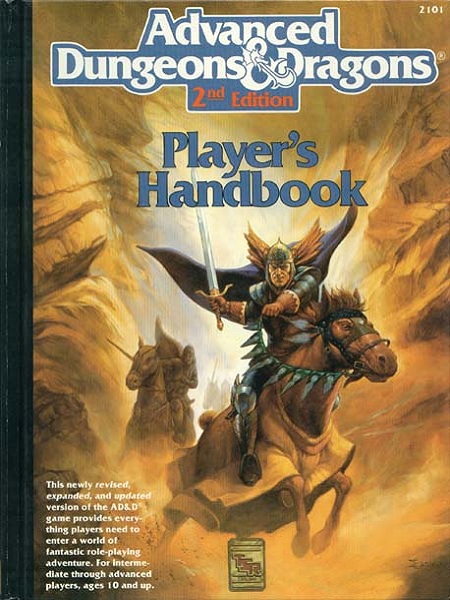
[Article] Handbooks, Guides & Manuals


One Ring To Rule Them All...


...And In The Darkness Bind Them!


Thursday, March 24, 2011

[Review] AA7 The Sarcophagus Legion


The Sarcophagus Legion

Author: Andrew Hind
Contents: 16 saddle stitched black and white pages, 1 title page, 13 pages of adventure, 1 page of OSRIC advertisements, and 1 open game license page.
Publisher: Expeditious Retreat Press
Product Code: XRP6107
Retail Price: £7.00 or $12.00

Overview

An adventure for 4-6 characters of levels 2-4, the Sarcophagus Legion presents a desert wilderness area and two dungeons, each consisting of one level. The physical product has a glossy cover stock and durable internal pages; the text has been clearly rendered, as have the black and white interior maps. Happily, the spine seems to be showing more resistance to wear than the last two in this series. The cover illustrations by Bradley K. McDevitt depict encounters in the module and appeal to traditional sensibilities, though the back image is perhaps the more compelling of the two. Of the three interior pieces by John Bingham, the title page image is particularly good. In addition to being evocative of the substance and theme of the module, it is a stylistically strong example of his work. The writing is for the most part energetic and clear, but does sometimes become cumbersome and over descriptive in places. An informed reader might suspect that the module was written in the style of a Dungeon Crawl Classic and then later converted over as a prospective Advanced Adventure, the read aloud text being integrated into the area descriptions, and a repeat error in the monster entries appears to confirm that as a likelihood.

The basic scenario is relatively straightforward; the sultan of a small desert kingdom seeks to engage the services of the adventurers to retrieve his fifth wife, Syriana, from a band of dervishes, who have taken her captive after ambushing her caravan. However, unbeknownst to the party and only lately revealed to the sultan, this unfortunate woman has been determined to be the reincarnation of a long dead queen, whose blood can be used to ritualistically animate the dead. In particular, she can potentially be used to bring into undying service a legion of mummies reputed to lie dormant beneath an abandoned temple deep in the desert. This is a setup with great potential, and reminiscent of a good number of Doctor Who episodes, but it is unfortunately largely squandered. Instead of becoming embroiled in the political intrigue and power struggle between the sultan and the dervishes for control of the ruined temple and the means to awaken the undead legion beneath, the adventurers are sidetracked to a former derro stronghold where Syriana has ended up; after rescuing her they are unavoidably betrayed and captured by servants of the sultan, then expected to escape so that they can rescue her again from the temple.

Whilst both dungeons are reasonably interesting and playable individually, they read as though they were designed independently and then stitched together into a heavy handed narrative. At first blush the wilderness map seems to promise open ended exploration, but the reality is much more linear, a string of encounters leading to a final showdown in the temple, the sacrifice essentially delayed until the adventurers show up. Hind, as always, provides numerous memorable encounters with innovative denizens, which offsets to some degree the larger design shortcomings. The clockwork spider and Laukshar the Leaking, a diseased ghoul priest, are particularly interesting examples of twists on conventional monsters, but there are also thematic magical items to be had and deadly locations to avoid, such as the "Pit of Fangs". Good use is made of task resolution mechanisms, rather than simple reliance on linear attribute checks, such as bend bars/lift gates to escape magical attacks and opportunities to forestall saving throws. Even experienced players should find an entertaining surprise or two in this module, and intelligent play will usually be rewarded, allowing the party to avoid expending resources unnecessarily. 

Technicalities and Errors

Occasional textual errors, such as "desrt" (p. 2), are almost unavoidable, but still worth noting. The stylistic and notational inconsistencies are somewhat irritating; for instance, the forms "1-6", "2-12", "1-6+1", "1d6", and "d6" are all in evidence, and whilst such lack of standardisation might be thought endearing by some, it is seems doubtful that it was really intended. On the other hand, the notation for less than a full hit dice is consistent in that it is presented as a hit point range, even if fractional notation is arguably more aesthetically pleasing. However, the most significant technical fault of this module is that the movement rates for all of the monsters and non-player characters are the D20 values, up to and including the new monsters in the appendices. Consequently, skeletons and dervishes have a move of 30’ instead of 120’, and that can only be confusing for a game master who does not realise what has probably happened. Errors of this sort must be caught in editing, especially if a module shows signs of being originally written with a different system in mind. It is particularly unfortunate because the statistic strings are otherwise very consistent, the product of some considerable care.

Conclusion

Conceptually, the Sarcophagus Legion has a lot to offer, the sultan is well characterised and the political situation provides plenty of opportunity for adventure. Moreover, its individual elements are good examples of Andrew Hind’s imaginative approach to swords & sorcery adventure, but as a whole it falls somewhat short of being an ideal module. Perhaps its worst design transgression is the pause between dungeons that requires the player characters to surrender or die, presuming the former. The lack of wandering monsters in the dungeons and relatively linear structure of the maps (though this is less of an issue with the mines than the temple) are also issues. With enough time and will, any experienced game master could get a lot out of what is provided, but as it stands the Sarcophagus Legion is in need of redesign and further development to meet the full potential of the ideas it contains. That is not to say that the module is a failure, indeed it is not a bad marriage of traditional game rules and modern adventure design sensibilities. Nonetheless, that is not really what has come to be expected of the Advanced Adventures series, but it is still to be hoped that Hind continues to bring his creative talent to future modules of improved design.

Monday, January 10, 2011

[Article] Turning Ability


The genesis of the Dungeons & Dragons cleric class is relatively well known. Inspired by the character of Van Helsing and his analogues as portrayed in the Hammer Horror films of the preceding decades, the cleric was created to combat a particularly troublesome vampire player character known as “Sir Fang”. To this somewhat narrow archetype were appended the trappings of a pseudo-medieval warrior priest typology, and the infamous restriction against the use of edged weapons (later “edged and/or pointed weapons which draw blood”). This latter clause was derived from a nineteenth century visual interpretation of the depiction of Bishop Odo in the Bayeux Tapestry, which was current in academic circles up until the late twentieth century, and remains embedded in the popular consciousness, even amongst those who really ought to know better. Gygax showed some trepidation in this assertion by the time of the Player’s Handbook, when he stated that the cleric has “a certain resemblance to religious orders of knighthood of medieval times” (p. 20), who he must have known were under no such compulsion. Regardless, the most formidable abilities of the class, casting spells and turning away evil spirits, have little to do with the military orders.

Whilst spell casting was already well established in the developing milieu, the ability to turn away undead, as well as lesser demons and devils, was a new addition. It fairly clearly has its roots in the conventional Hammer Horror scene where a character attempts to keep a vampire away by holding up a cross, with varying degrees of success (perhaps most amusing of these is an instance in which a character played by Peter Cushing destroys a vampire with the shadow of a burning windmill). These sort of scenes no doubt owe their currency to the myriad superstitions concerning the warding off of evil with magical amulets or sacred objects, and the reputed power of holy men to themselves drive away evil spirits. However, even in the original version of Dungeons & Dragons the vampire is singled out as averse to garlic, mirrors, and the sight of the cross, over and above any power of the cleric, if “presented strongly” (Monsters & Treasures, p. 10). Indeed, to turn away a vampire ordinarily a cleric must be at least sixth level (and thus equivalent in fighting ability to a hero) and roll a nine or more on two six-sided dice, a probability of only ten in thirty-six or just less than twenty-eight percent.

It is interesting to note that, just as the Chain Mail man-to-man combat system and its two six-sided dice gave way to the alternative combat system and its twenty sided die, Advanced Dungeons & Dragons did the same with regard to the turning ability. This was not the case with B/X or BECMI, both of which retained the shortened bell curve approach. Frank Mentzer, primary editor and designer of the later, has mentioned in the past that this also mirrored the B/X and BECMI morale rules, which used two six-sided dice, and that this was similar to how he envisioned a turning attempt, which is to say as a morale test for the undead. Of course, morale was not described in the original Dungeons & Dragons game, presumably the game master was expected to borrow from the byzantine Chain Mail version, though many must have used the “reaction test” as a stand in, again using two six-sided dice. Nonetheless, the morale rules for Advanced Dungeons & Dragons used percentiles, with modifiers mainly in five-percent increments, which obviously would work well with a twenty-sided die. Oddly, the second edition of the advanced game compromises between the two methodologies by using two ten-sided dice for morale, but not to generate percentiles.

Once the numbers for the original chart are converted to percentiles (8.340%, 27.78%, 58.33%) it quickly becomes evident that Gygax rounded them off (0.10, 0.30, 0.60), inserted an additional increment between the largest step (0.10, 0.30, 0.45, 0.60) then shifted the probability down one for the latter three numbers (0.10, 0.25, 0.40, 0.55), paralleling what he did for armour class, before converting the probabilities to target numbers on a twenty-sided die (19, 16, 13, 10). He then extended the range downwards by increments of fifteen percent, and made “20” the top of the range (20, 19, 16, 13, 10, 7, 4). For whatever reason, levels 4-7 (hero to superhero −1) omit the 19 between 16 and 20, increasing the overall effectiveness of the cleric from what might be expected of the pattern between levels 1-3. Unsurprisingly, second edition standardised the table to follow the initial pattern, resulting in a corresponding decrease in effectiveness. The expansion in level range and decrease of one step between “D” and “D+” (or D*) somewhat flattened out the curve, along with the switch from “1-12 affected” to “2-12 affected”, and “7-12 destroyed” to “2-12 destroyed and 2-8 turned”, respectively.

Although the original version of turn undead specified the number to be turned as 2-12, it did not indicate how frequently the ability could be used, its range, area of effect, or for how long it was effective once employed, amongst other things. B/X somewhat clarified things by allowing turn undead to be used as frequently as desired, but reduced its effectiveness to 2-12 hit dice, albeit with a minimum of one creature affected. Advanced Dungeons & Dragons took the opposite approach, restricting use to more or less once an encounter (under limited conditions it could be used in consecutive rounds against different types) and specifying the duration as 3-12 rounds, with previously affected undead “being subject to further turning by the cleric” (DMG, p. 76). The second edition returned to vaguer language, and duration seems to be as long as “he continues to maintain his turning”. Whilst that works well for turned undead, it makes destruction results extremely effective; for instance, to a tenth level cleric a pack of 2-16 wights is potentially little to no threat, but 2-12 wraiths remain foes to be feared! Happily, it does at least specify that cornered undead will fight back, “breaking” the turning effect.

For my own campaigns none of the approaches above have entirely sufficed, even less so when chaotic or evil clerics are stirred into the mix, not to mention the unlooked for vulnerability of paladins. Perhaps a better way to handle it would to be to treat it like a spell, an approach that has certainly been postulated elsewhere. However, that is not really any different than restricting it to a once per day effect, which would avoid the complication of introducing an additional slot. As long as an encounter can be defined, there is no reason not to keep it at once per encounter. The variable number of affected undead is a little unpalatable as an all or nothing affair, and the obvious solution is to roll one turning attempt against each target up to twelve, which would result in a more average spread of results, but “T” and “D” effects would always be the maximum. One way to counter that would be to spread out the probabilities for one half of the matrix on a 1:1 basis and use a higher ratio for the other, such as 1:2 or the 1:3 of the original scale. As things stand turn undead is somewhere between a saving throw based fear spell and a percentile morale test, neither fair nor foul. For those interested, comparative charts can be downloaded here.